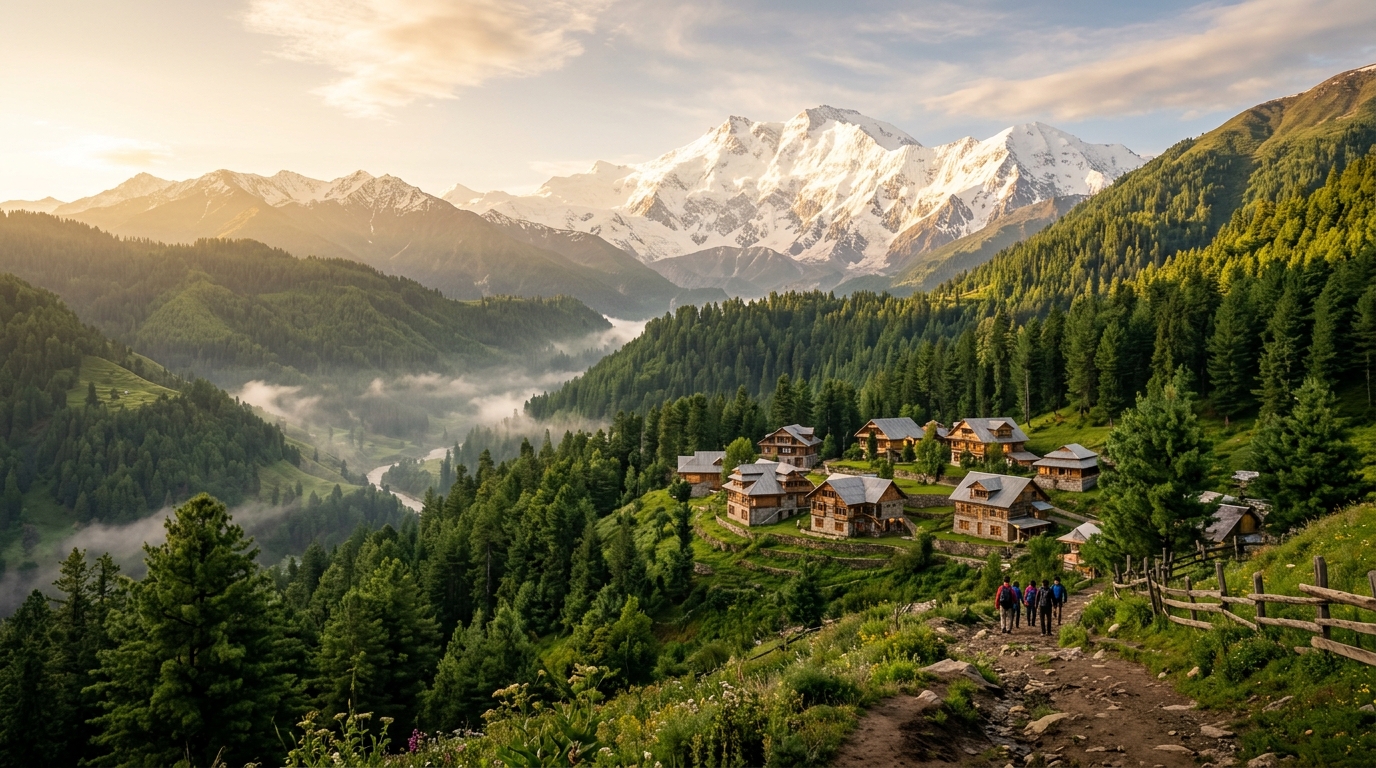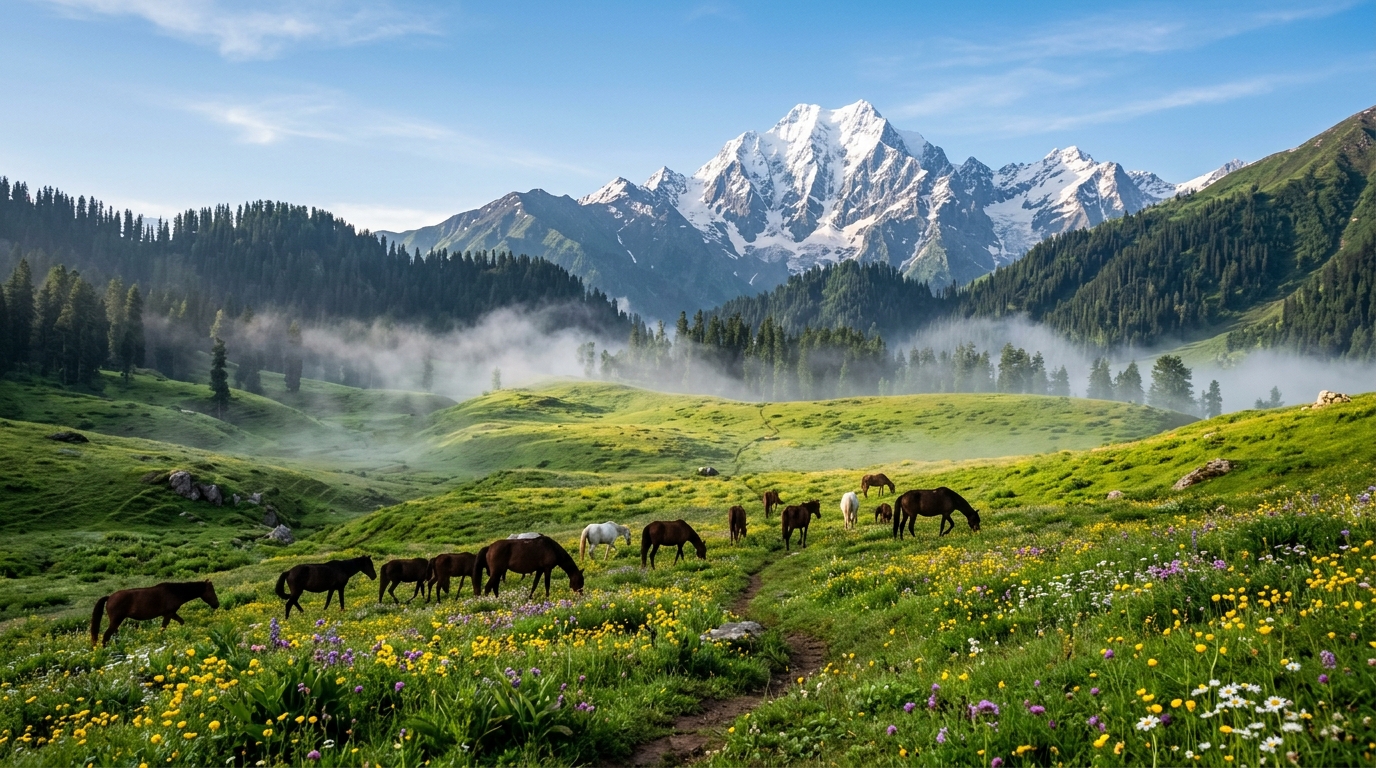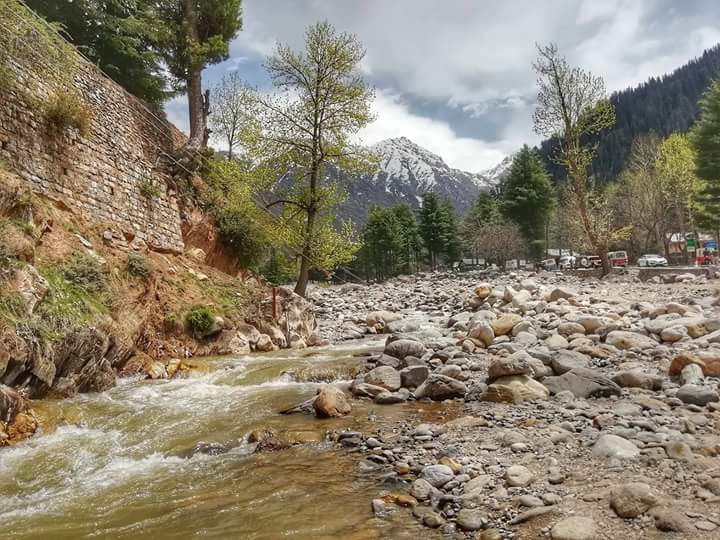
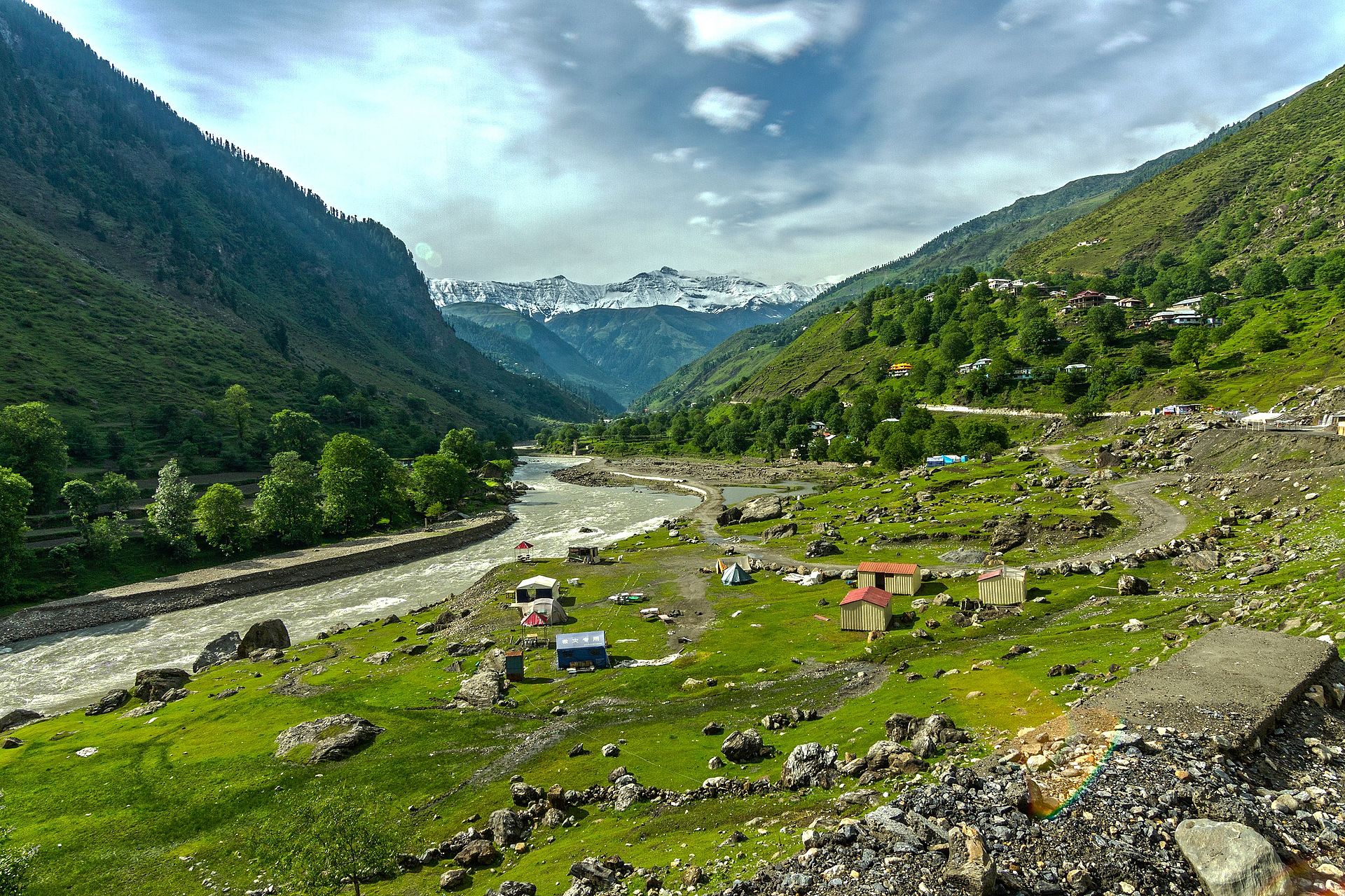
The road to Siri Paye is a slow, deliberate climb — a jeep track worn smooth by monsoon runoff and mountain hooves. Leave the retreat at 4:30 am and you'll arrive just as the ridgeline behind the meadow starts to blush a pale, almost embarrassed pink.
- Best months
- May – October
- Difficulty
- Moderate
- Elevation gain
- 300 – 700 m
- Start time
- Before sunrise
The hour before light
There is a specific quality to the dark at 12,000 feet in early May. The air is thin and the stars, if the night has been clear, sit closer than they have any right to.
We usually pack a thermos of masala chai and two hard-boiled eggs. You will not want breakfast — you will want warmth in your hands.
Where to stand
Most visitors stop at the first plateau where the jeeps park. Walk another twenty minutes east and drop down into the shallow bowl below the shepherd's stone hut. This is where the wild irises grow — pale violet, ankle-high, and, when the light lands right, entirely worth the cold.
Shoot wide first. The temptation is always to reach for the telephoto and pick out the peaks, but the meadow is the story here.
A word on the crowds
By 9 am the jeep convoys arrive from Naran and the spell breaks a little. Be back at the retreat by then, sitting on the terrace with a proper breakfast and the day still ahead of you.
What to carry
A one-litre bottle, a wind shell even when the sky looks perfect, a small headtorch, and a printed map. Do not rely on phone signal above the retreat — it will come and go.
One handful of dried apricots and a small bar of dark chocolate. Altitude blunts appetite; sugar keeps the legs honest.
“The meadow is the story here — the peaks are only the frame.”
Weather and safety
Afternoon storms build fast in July and August. If you see the first anvil cloud rising over the eastern ridge, turn back — the storm will arrive within forty minutes.
Tell the front desk your route and your return time. This is a small, quiet valley, and a check-in on the way out costs you nothing.
Reading the mountain
Watch the shepherds, not the sky. If the Gujjar families are moving their buffalo down at three in the afternoon, the weather is turning — regardless of what your phone says.
Listen for the wind in the deodars before you leave a ridge. A rising, hollow note through the tops usually means a front is fifteen minutes out. A steady low murmur means you have another hour.
Above three thousand metres, distance flatters itself. What looks like a twenty-minute climb is often an hour. Halve the pace you'd keep at home; you will still arrive.
After the walk
Back at the retreat, change immediately. Damp base-layers at altitude cool the body faster than most people expect — the difference between a warm evening and an early night is a single dry merino tee.
Ask the kitchen for hot ginger water with a squeeze of lemon before dinner. It settles the chest and, entirely coincidentally, tastes very good.
Write down the route while it is fresh — the branches you took, the water source, the stone cairn that was, or was not, where the map said it would be. The next guest to walk this line will thank you.
— In closing
A last thought before you go
A walk in the Kaghan is never only a walk. It is an argument, quietly made, that pace is a form of attention — and that attention is the only real souvenir of a mountain.
Whenever you go, go slowly. The valley will meet you at exactly the speed you agree to meet it.
— Frequently asked
Questions guests often ask
- What is the best month to walk this trail?
- Late May through early October, with June and September offering the clearest light and thinnest crowds.
- Do I need a local guide?
- For unmarked shepherd paths, yes. Oro Shogran arranges vetted local guides who know the ground and the weather patterns.
- How fit do I need to be?
- A comfortable one-hour uphill walk at sea level translates to roughly two hours here. Pace, not pace-per-kilometre, is the goal.
— Further reading
If you liked this piece
Mazhar Khan writes from the retreat about mountain travel, food, and the small rituals of hospitality in the Kaghan Valley.