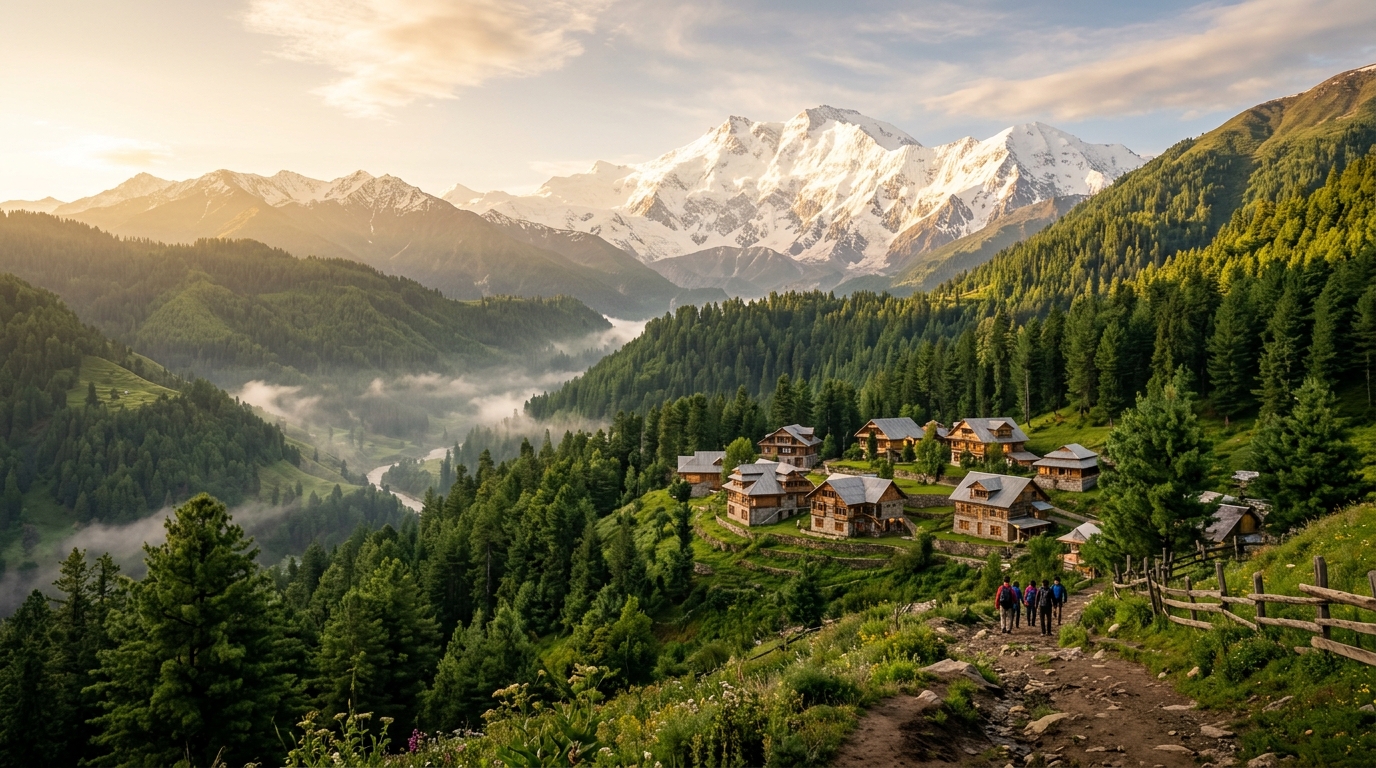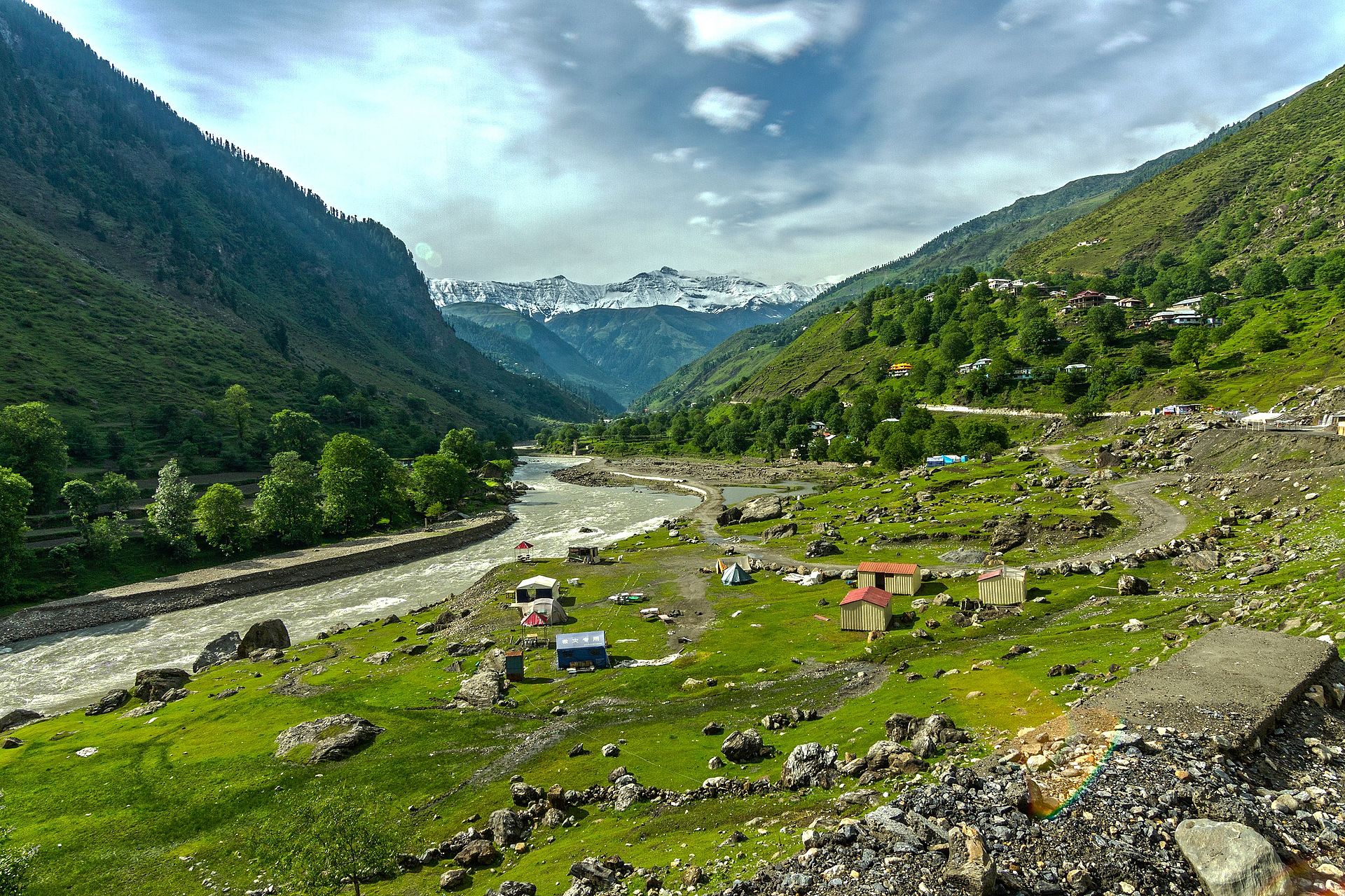
The Kaghan Valley has never been quite as remote as it feels. For at least a thousand years it has been a summer route — for herders, for traders, for the occasional army — moving between the plains of the Punjab and the high pastures of the Deosai.
- Read time
- A slow evening
- Pairs with
- A pot of chai, a warm blanket
- Best read at
- Oro Shogran, on the terrace
The Silk Road spurs
The main Silk Road passed well to the north, but minor spurs threaded through these valleys, carrying rock salt, dried apricots and, occasionally, lapis lazuli.
You can still find, if you know where to look, small caravanserai foundations along the old routes above Balakot.
The Gujjar herders
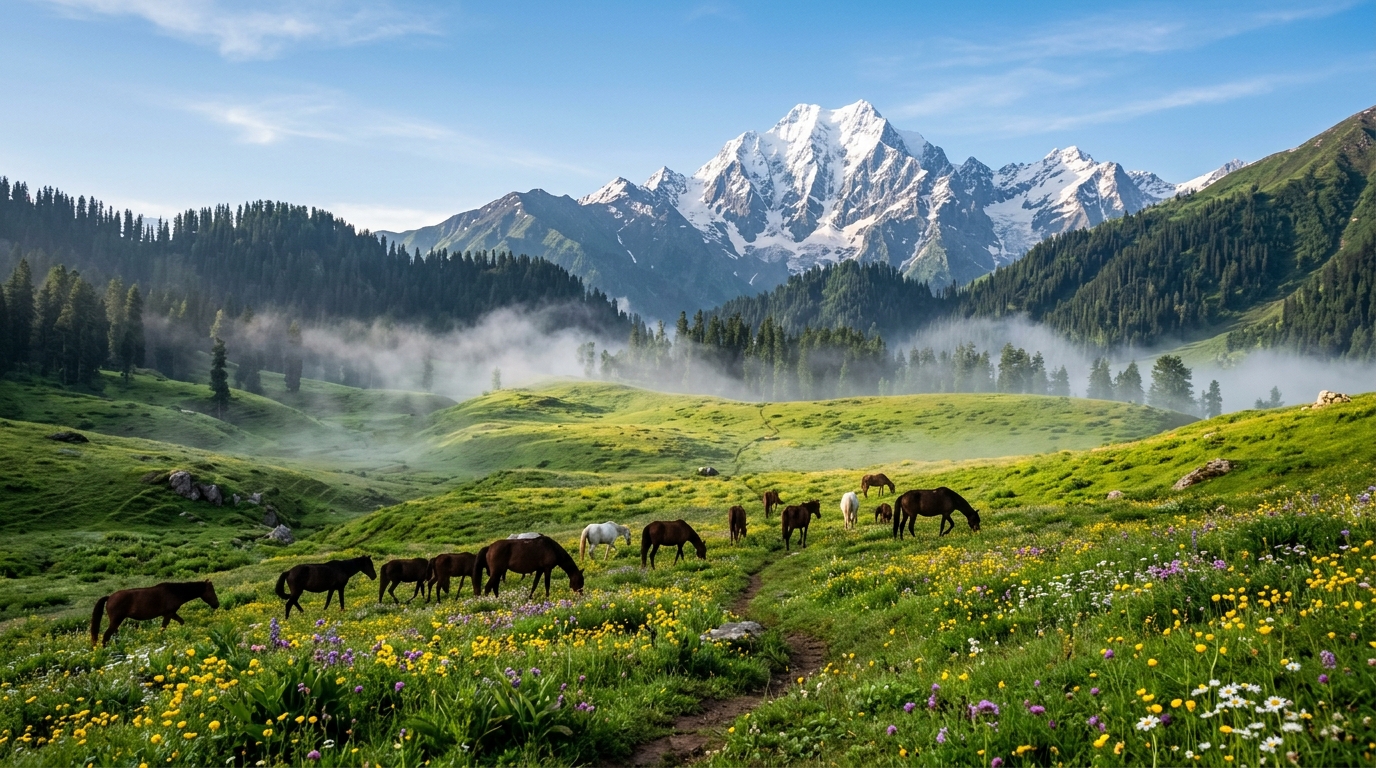
Every summer, families of Gujjar herders move their buffalo up the slopes to the high meadows. They have done this, in more or less the same way, for at least four centuries.
If you walk far enough up the ridge behind the retreat in July, you will find them — small clusters of stone-and-wood huts, blue smoke, a kettle always on.
The modern valley
The road up to Naran was paved, in stages, between the 1960s and the early 2000s. The valley you drive through today is, in geological terms, unchanged, and in human terms, almost unrecognisable from what it was fifty years ago.
A note on silence
We do not enforce silence at Oro Shogran, but we design for it. The library has no speakers. The dining room has no music before dusk. The corridors are wide enough that footsteps carry, and short enough that they do not accumulate.
The result, most evenings, is that a guest can spend three hours in the public rooms without ever quite being alone, and without ever quite being interrupted.
What guests tell us afterwards
Six months after their stay, we ask returning guests what, specifically, they remember. It is almost never the food, and almost never the view. It is, over and over again, a small detail — the hot water bottle in the bed at turn-down, the second pot of chai that arrived without being asked for, the way the night watchman said goodnight.
This is the retreat we try to run: one where the small things are done, and done again, until they become the whole story of the stay.
Time, at altitude
The hours behave differently here. Not slower, exactly — thicker. A morning between six and nine, in the right kind of weather, can hold the emotional weight of an ordinary weekend.
We think this is partly the light and partly the silence, but mostly it is that there is nothing, at Oro Shogran, that you are obliged to do. Duty at altitude is very light, and the mind takes the space this leaves.
What we are still learning
That a hotel, at its best, is a piece of architecture designed for one specific emotion — welcome — and that everything else must be quietly arranged around that single line.
That good service is invisible service. That the finest compliment a guest ever pays is to forget, for an entire afternoon, that they are a guest.
That the mountain is, in the end, the co-author of every stay. We only manage the margins.
— In closing
A last thought before you go
If there is a single argument this essay wants to make, it is small: that the way we host each other still matters, and that a small hotel on a ridge in the Kaghan Valley is as good a place as any to make the case.
Come and see. Stay three nights. Judge us on the third morning.
— Frequently asked
Questions guests often ask
- How long should I stay to feel the difference?
- Three nights, minimum. The first is arrival, the second is adjustment, the third is when the retreat and the valley begin to work on you.
- Is Oro Shogran suitable for solo travellers?
- Very much so. A great many of our returning guests come alone, and our public spaces are designed for quiet company as much as for conversation.
- Can I bring my own book / work / camera and just be left alone?
- Yes — that is, in fact, the version of the stay we most often recommend.
— Further reading
If you liked this piece
Mazhar Khan writes from the retreat about mountain travel, food, and the small rituals of hospitality in the Kaghan Valley.