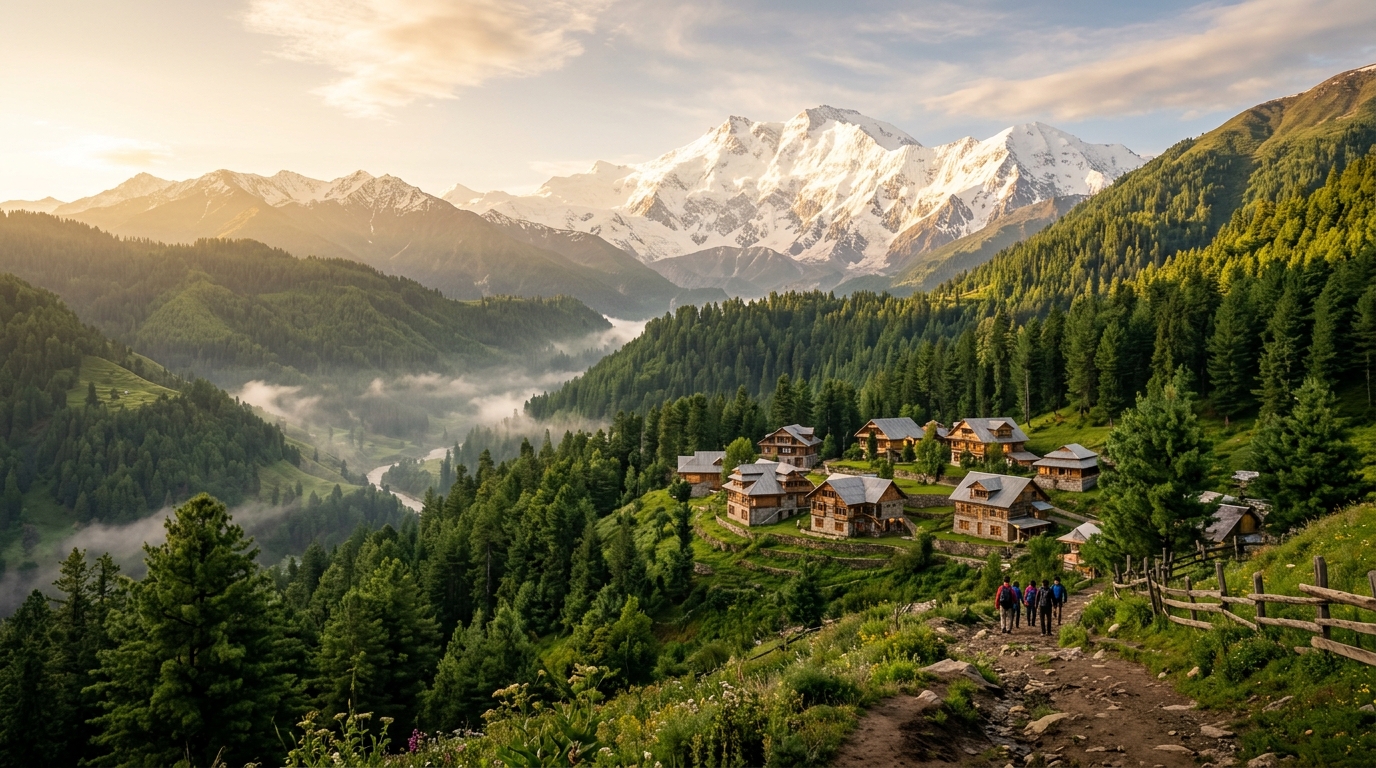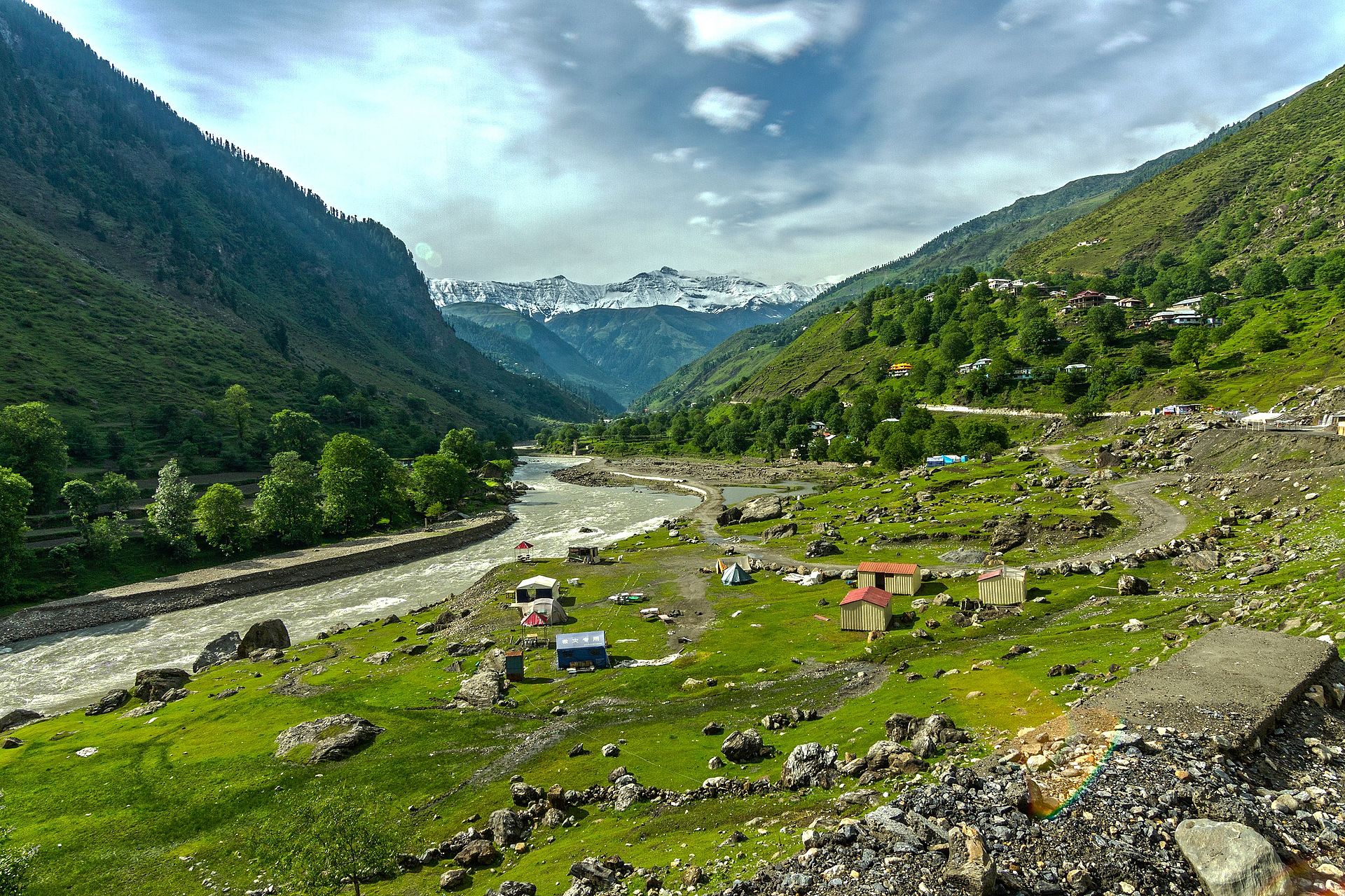
There is a specific chai that emerges, always in a battered aluminium flask, halfway up the road to Lulusar. It is not fancy. It is exactly what the cold, the altitude, and the long drive require.
- Serves
- 2 – 4
- Difficulty
- Approachable
- Kit
- One heavy pan
- Best paired with
- Steamed rice, cold yoghurt
The recipe
Four cups of water, four cups of whole milk. Six green cardamom pods, crushed. Four tablespoons of loose black tea (Kenyan, if you can find it). Sugar to taste — start with four tablespoons and adjust up.
A single, contested pinch of salt. Our driver Nazir insists on it. He is right.
The method
Boil the water with the cardamom for two minutes. Add the tea and simmer, hard, for another two. Add the milk and sugar and bring back to a slow boil. Turn the heat down and let it darken for four more minutes.
Strain into a warmed flask. Drink within three hours; after that the tannins turn bitter and you will regret every sip.
The pantry we keep
Pink Himalayan salt, whole Kashmiri chillies, green cardamom, jaggery, sun-dried mulberries, and mustard oil pressed twenty kilometres from the kitchen. If you build a pantry around these, most of our menu becomes possible.
We buy walnuts by the sack in October and store them, unshelled, in a cold cupboard. They last, quite honestly, until April.
How to serve
Warm plates. Nothing else undoes careful cooking faster than a cold plate on a cold evening.
One green vegetable, one starch, one thing pickled. This is the shape of most dinners at Oro Shogran, and it is a shape we recommend at home.
Sourcing at home
If you can, buy from a single farmer or a single shop and keep going back. The recipe improves faster with a consistent ingredient than with a perfect one.
Whole spices, not ground. Ground spices lose their edge in six weeks; whole cardamom, cumin and coriander hold for a year in a cold jar.
Ferment one thing in your kitchen — yoghurt, a chilli pickle, a jar of lemons in salt. It changes what your food can do.
Common mistakes
Rushing the fat. Butter, ghee and mustard oil each have a moment they want to be used — before that moment they are heavy, after it they are burnt. Learn the smell of each at its right temperature and every dish improves overnight.
Over-salting at the start. Season lightly, taste at the end. Salt is a scalpel, not a hammer.
Treating chai as an afterthought. It is not. It is a course, and it earns the same attention as the meal that preceded it.
— In closing
A last thought before you go
Mountain cooking is not about being clever. It is about being quiet — hearing the fat, watching the water, trusting the ingredient to be more interesting than the technique.
Make this once for yourself before you make it for anyone else. That is when it becomes yours.
— Frequently asked
Questions guests often ask
- Can I make this dish at sea level?
- Yes. Reduce cooking time by roughly ten to fifteen percent and taste for seasoning slightly earlier than the recipe suggests.
- What can I substitute if I cannot find the exact ingredient?
- Stay close to the texture and fat content of the original. Substitute a herb for another herb, not a herb for a spice.
- Do you serve this at the retreat?
- Most weeks, yes — either on the tasting menu or on request the night before. Ask when you check in.
— Further reading
If you liked this piece
Mazhar Khan writes from the retreat about mountain travel, food, and the small rituals of hospitality in the Kaghan Valley.